Indigenous History
Long before European settlement, the Coldbrook area was part of Sipekni’katik, a Mi’kmaq district whose name means “wild potato area,” encompassing what is now Halifax, Lunenburg, Kings, Hants, and Colchester Counties. The Cornwallis River, which flows near Coldbrook, was known to the Mi’kmaq as Chijikwtook, meaning “narrow river.”
Acadian and Planter Era
French Acadians farmed the fertile marshlands of the Annapolis Valley from the early 1600s until the Acadian Expulsion of 1755. Following the expulsion, New England Planters arrived between 1760 and 1768 and were granted the vacated lands. The Township of Cornwallis was founded in 1759, with the first lots placed near the mouths of the Cornwallis, Cunard, and Habitant Rivers. Loyalists arriving during and after the American Revolution further expanded the Valley’s population through the 1780s.
Coldbrook’s First Settler
Asa Davidson is believed to have been Coldbrook’s earliest known European settler, arriving sometime between 1764 and 1782. Among the early family names documented in the Coldbrook and Berwick area are Davidson, Parker, Shaw, Skinner, Huntington, Lyon, and Loomer.
The Name “Coldbrook”
In 1792, a stopping place on the Annapolis Road — now Highway 1 — was recorded as an English farm “now known as Colebrook,” named after a community in Wales. With the arrival of the Windsor and Annapolis Railway in 1869, the village became known as “Cold Brook Station.”
Growth of a Community
Coldbrook grew steadily around sawmills, apple export warehouses (established 1908), a bulk oil depot (late 1920s), and the United Fruit Companies and Scotian Gold Co-operative fruit processing plant (1946 and 1957). After sewer servicing arrived in 1978, Coldbrook became one of the fastest-growing communities in Nova Scotia through the 1980s and 1990s.
Visit the Cemetery
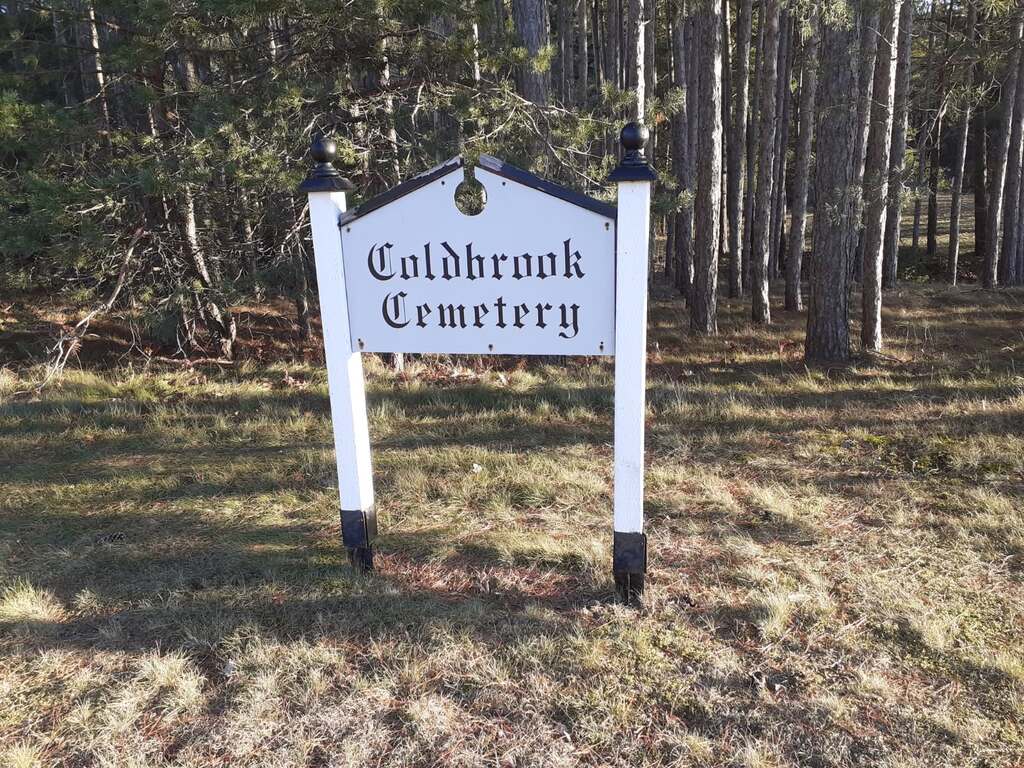
The Pioneer Cemetery is maintained by the Coldbrook Community Association. For more information contact us at [email protected].